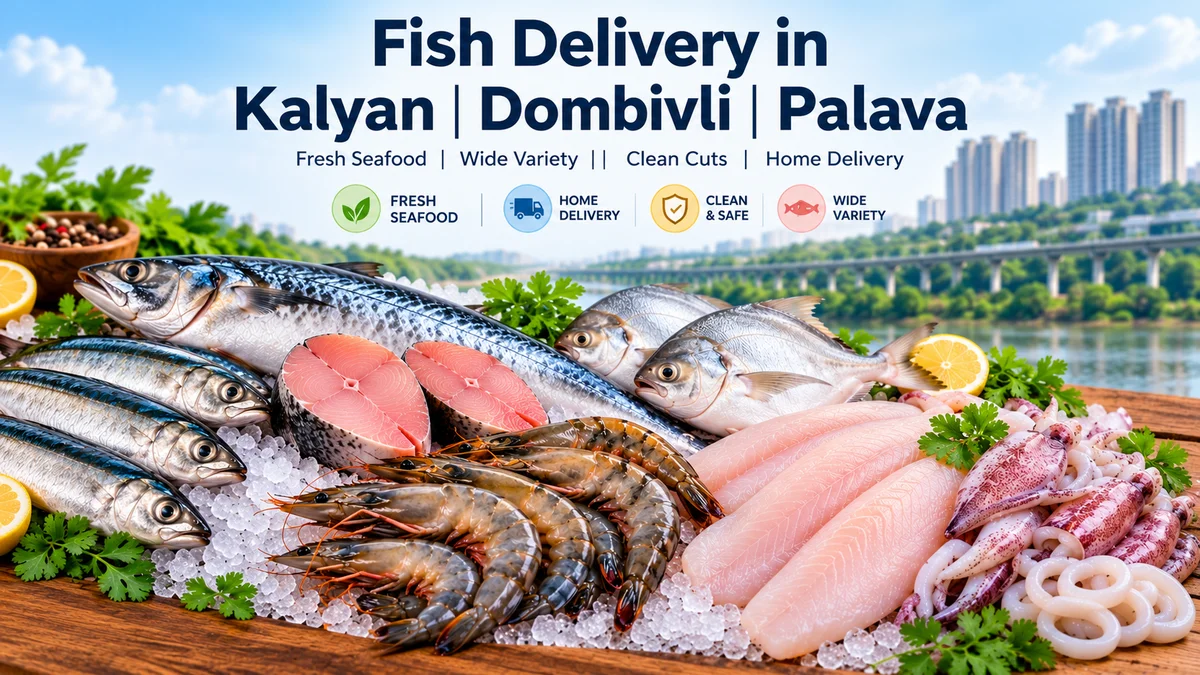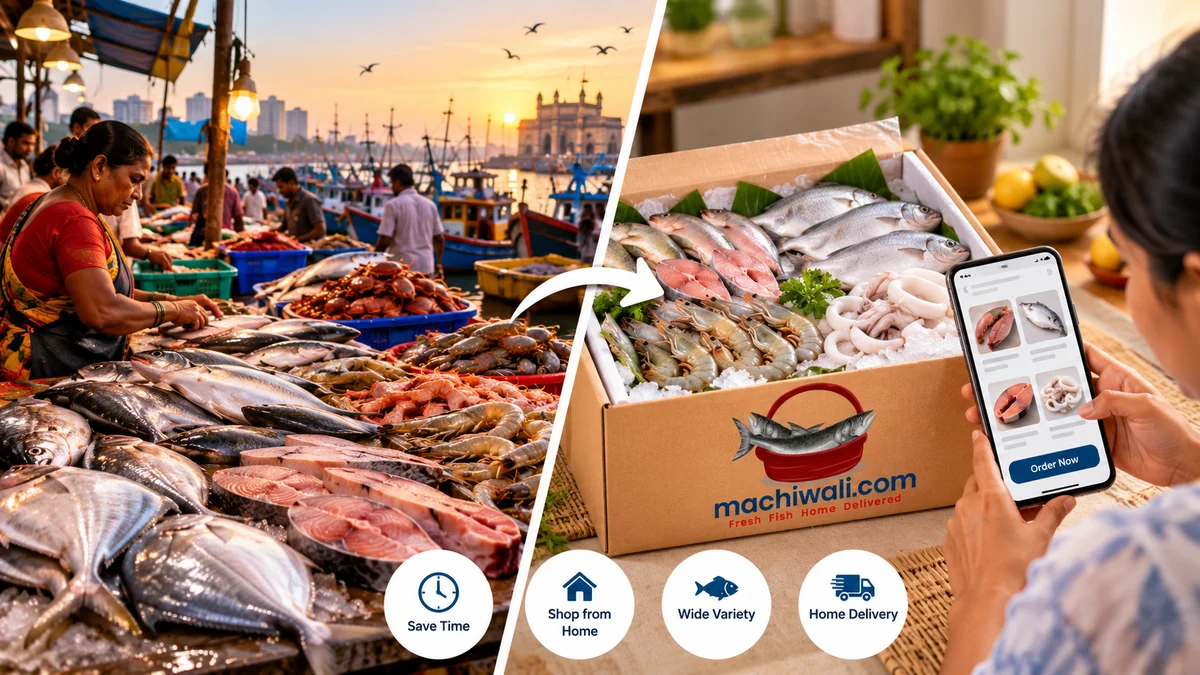
Mumbai Seafood Market Guide: Why Buying Fish Online Is a Better Choice
Mumbai and seafood have a special connection. From the traditional fish markets of the city to the coastal kitchens of Maharashtra, fish and seafood have always been an important part of local food culture. Whether it is spicy Surmai Fry, a comforting Pomfret Curry, fresh prawns or a traditional Bangda preparation, seafood is a favourite in countless homes across Mumbai and its surrounding suburbs.
For generations, people have visited local fish markets early in the morning to buy their preferred catch. The experience of walking through a busy market, comparing different varieties and choosing fish for the day's meal is familiar to many seafood lovers.
However, modern lifestyles are changing how people shop for seafood. With busy work schedules, traffic congestion and the need to manage household responsibilities, travelling to a crowded fish market is not always convenient.
This is where online seafood shopping offers an alternative.
Instead of spending time travelling, searching for parking and standing in queues, customers can explore available seafood, compare products and place orders from home.
In this guide, we explore Mumbai's seafood market culture, the challenges of traditional fish shopping and why buying seafood online can be a more convenient option for households in Dombivli, Kalyan, Palava and nearby areas.
1. Mumbai: A City That Loves Seafood
Mumbai's relationship with seafood is closely connected to its coastline and fishing communities. Fishing has supported local livelihoods for generations, while seafood has remained an important part of the city's culinary identity.
Traditional fishing communities, including the Kolis, have helped shape Mumbai's distinctive seafood cuisine. Their cooking traditions feature fish curries, fried fish, prawns and other coastal specialities prepared with local spices and ingredients.
Across the city, seafood is enjoyed in many forms:
Surmai Fry with a spicy red masala coating
Pomfret Fry served with lemon and onion
Prawns Koliwada as a crispy starter
Bangda Curry with steamed rice
Prawn Masala with chapati or bhakri
Squid Fry prepared with chilli and garlic
Fish curry cooked with coconut, tamarind and traditional spices
From home kitchens to neighbourhood restaurants, seafood remains a familiar part of Mumbai's food culture.
For many families, buying fish is not simply about purchasing an ingredient. It is about preparing favourite meals, following family traditions and enjoying the flavours of coastal Maharashtra.
2. Understanding Mumbai's Traditional Fish Markets
Mumbai has several well-known seafood markets serving households, restaurants, retailers and other buyers.
Sassoon Dock
Sassoon Dock in Colaba is one of Mumbai's historic fishing harbours and seafood trading centres. Fishing boats bring their catch ashore, and the area plays an important role in the city's fishing economy.
The activity around the dock reflects the scale and importance of Mumbai's seafood supply chain.
Crawford Market and Other Retail Markets
Mumbai's established retail markets offer a variety of food products, including fish and seafood. Availability, pricing and selection can differ depending on the market, vendor and time of day.
Neighbourhood Fish Markets
Local fish markets across Mumbai and the suburbs are often the most familiar shopping option for households.
Customers may visit their neighbourhood vendors to purchase fish according to their daily requirements. Regular customers often develop relationships with individual sellers and become familiar with their preferred varieties and prices.
Wholesale Seafood Markets
Wholesale trading centres supply seafood to retailers, restaurants, hotels and other businesses. These markets form part of the wider network connecting fishing activity with consumers.
An important distinction: Wholesale markets are primarily trading centres, while retail fish markets cater more directly to individual shoppers. Not every market offers the same products, prices or shopping experience.
3. The Challenges of Buying Fish from Traditional Markets
Traditional fish markets remain valuable to Mumbai's seafood economy. Many customers appreciate the opportunity to inspect fish and interact directly with sellers.
However, visiting a physical market can also involve practical challenges.
A. Travelling Takes Time
For residents of Dombivli, Kalyan and Palava, travelling to a preferred seafood market can require considerable planning.
Depending on the destination, traffic and transport options, the journey may take a significant amount of time.
Customers must account for the journey to the market, time spent shopping and the return trip home.
Online ordering can eliminate the need for this particular shopping journey when the service delivers to the customer's location.
B. Crowds During Busy Hours
Popular markets can become crowded during peak shopping periods, particularly when many households are purchasing seafood for lunch, dinner or special occasions.
Navigating busy aisles while comparing products and carrying shopping bags can be inconvenient.
Ordering online allows customers to browse available products at a time that suits them, without having to navigate a crowded market.
C. Limited Time for Working Families
Many people balance employment, commuting, household responsibilities and family commitments.
Taking time out to visit a fish market may not always fit into their schedule.
Online seafood shopping provides an additional option for customers who want to plan their meals without making a separate trip to the market.
D. Carrying Seafood Home
Fish and seafood require careful handling to maintain quality.
After purchasing seafood, customers need to transport it home promptly and store it at an appropriate temperature.
This can become inconvenient during a long journey, especially in warm weather.
A delivery service that uses suitable insulated packaging and appropriate temperature control can make the process easier. Customers should check how the seller handles and transports seafood rather than assuming every online service follows the same standards.
E. Comparing Prices Can Be Time-Consuming
Seafood prices can vary according to species, size, season, availability, market conditions and preparation requirements.
Customers visiting a physical market may need to ask several vendors for prices before making a decision.
Online stores can make comparison easier by displaying product prices, pack sizes and other details together.
However, the lowest price does not always represent the best value. Customers should compare the quantity supplied, cleaning options, edible yield, delivery charges and product specifications.
4. Why Buying Seafood Online Can Be Better
Online seafood shopping is not necessarily better for everyone, but it can offer significant advantages for households that value convenience and predictable shopping.
Here are some of the main reasons customers are choosing this option.
1. Shop from Home
One of the biggest advantages is convenience.
Customers can browse seafood products using a mobile phone or computer without travelling to a physical market.
Whether planning a weekday dinner or a weekend family meal, they can check available products and place an order from home.
For households in Dombivli, Kalyan and Palava, this can be particularly useful when travelling to a preferred market is inconvenient.
2. Save Time on Shopping
Online shopping can reduce the time spent travelling, searching for a vendor and carrying purchases home.
Customers can use that time for work, family activities or meal preparation.
The actual time saved depends on the delivery service, delivery window and availability of products in the customer's area.
3. Explore Different Seafood Varieties
A well-organised online seafood store can display different products in clearly labelled categories.
Depending on availability, customers may be able to browse:
Surmai
Pomfret
Prawns
Basa fillets
Bangda
Squid rings
Product pages can also explain the cut, weight, cleaning status and recommended cooking methods.
This is especially helpful for customers who know which dish they want to prepare but are unsure which seafood product or cut to select.
4. Check Prices Before Ordering
Online product listings make it easier to review prices before committing to a purchase.
Customers can calculate the cost of a meal, compare different fish varieties and decide how much to spend.
For a fair comparison, check whether the listed weight refers to the whole fish, cleaned fish, fillets or another prepared form.
Cleaning and cutting can affect the final edible quantity, so the product description matters just as much as the price.
5. Choose Convenient Cuts and Preparation
Some online seafood stores offer products prepared for specific cooking methods.
Examples may include:
Surmai cut into steaks
Prawns peeled and deveined
Squid cut into rings
Basa supplied as fillets
Whole fish cleaned for cooking
When these options are available, customers can reduce the preparation required in their kitchens.
Always confirm the preparation options shown on the product page, as services differ between sellers.
6. Plan Meals More Easily
Online catalogues can help customers select seafood according to their planned menu.
For example:
For a quick weekday dinner: Basa fillets or cleaned prawns may be convenient options.
For a traditional Maharashtrian meal: Surmai steaks or Bangda may suit a fish curry or fry.
For a family gathering: Pomfret or a larger seafood selection may be appropriate, depending on the number of guests.
For starters: Prawns or squid rings can be used in popular dishes such as Prawns Koliwada and crispy calamari.
Having product details available in advance makes it easier to plan quantities and preparation.
7. Delivery to Your Doorstep
Doorstep delivery is one of the most practical advantages of online seafood shopping.
Instead of carrying seafood bags home, customers can arrange delivery to an eligible address.
The service is particularly useful for families with busy schedules or people who prefer to avoid additional travel.
Delivery coverage, fees, available slots and minimum order requirements vary between businesses, so customers should check these details before placing an order.
8. More Information Before Purchase
A good online seafood store should provide useful information about each product.
Depending on the seller, this may include:
Product name and variety
Price and pack size
Weight and cut
Cleaning and preparation details
Storage instructions
Suggested recipes
Delivery information
Clear product information helps customers make informed decisions.
If important details are missing, customers should contact the seller before ordering.
5. Does Buying Fish Online Mean You Get Fresher Seafood?
This is one of the most common questions customers ask.
The honest answer is that online ordering does not automatically guarantee fresher fish.
Freshness depends on several factors, including the condition of the seafood when sourced, the time taken to process it, hygiene practices, storage temperature and transportation.
A traditional fish market may offer excellent seafood when customers know their vendors and can inspect the catch directly.
An online seafood business can also provide good-quality products when it follows appropriate sourcing, handling, storage and delivery practices.
The important factor is not simply whether you buy online or offline. It is how the seafood is handled throughout the supply chain.
What Should Customers Look For?
When buying seafood online, consider the following:
Clear product descriptions: Check the species, cut, weight and whether the product is fresh or frozen.
Proper handling: Look for information about hygienic processing, suitable storage and insulated transportation where appropriate.
Transparent pricing: Confirm the price, quantity and any additional charges before ordering.
Reliable delivery: Choose a seller that communicates delivery timings and provides a way to contact customer support.
Storage guidance: The seller should explain how to store the product safely after delivery.
A clear complaint process: Check what to do if the delivered product does not match the order or arrives in an unsatisfactory condition.
These details are more useful indicators of service quality than simply assuming that every online or offline seller offers the same standard.
6. Fresh Fish vs Frozen Fish: What Should You Choose?
Customers sometimes assume that frozen seafood is automatically inferior to fresh seafood. This is not necessarily true.
Properly frozen seafood can retain good quality when it is handled and stored correctly. Freezing also allows seafood to be stored for longer than fresh, unfrozen products.
Fresh seafood can be an excellent choice when it has been handled properly and kept cold.
The right option depends on the product, how it was handled, the intended recipe and how soon you plan to cook it.
Fresh Seafood
Fresh seafood is often preferred for meals prepared soon after purchase.
When buying fresh fish, look for a mild, fresh smell and firm flesh. Avoid fish with a strong unpleasant odour or obvious signs of deterioration.
Frozen Seafood
Frozen prawns, squid and fish fillets can be convenient for meal planning.
Check the packaging, storage instructions and condition of the product. Avoid products that show signs of thawing and refreezing.
Thaw frozen seafood safely in the refrigerator or, when appropriate, in a sealed bag under cold running water. Do not thaw seafood on the kitchen counter.
The key takeaway: Good handling and appropriate temperature control matter more than the label alone.
7. How to Compare Online Seafood Prices Fairly
Price is an important consideration for most households, but seafood products should be compared carefully.
Imagine two stores listing Surmai at different prices per kilogram. Before choosing the cheaper option, check whether both prices refer to the same product form.
One listing might refer to whole fish, while another refers to cleaned steaks. The edible quantity and preparation requirements may therefore differ.
Use this checklist when comparing prices:
Compare the same species. Surmai and Basa, for example, are different fish and should not be treated as equivalent products.
Check the weight. Confirm whether the price is for 250 g, 500 g, 1 kg or another quantity.
Check the cut. Whole fish, steaks and fillets may have different prices and edible yields.
Review cleaning charges. Find out whether cleaning is included.
Include delivery charges. Calculate the final amount payable.
Check the condition. Compare fresh products with similar fresh products, and frozen products with comparable frozen products.
Review storage and handling information. Price should not be the only factor influencing your decision.
A transparent online listing can help customers make these comparisons before checkout.
8. Why Online Seafood Shopping Makes Sense for Dombivli, Kalyan and Palava
Mumbai's seafood culture extends well beyond South Mumbai and the city's traditional markets.
Residents in surrounding suburbs also enjoy fish curry, fried fish, prawns and other seafood dishes as part of their everyday meals.
For customers in Dombivli, Kalyan and Palava, online seafood shopping can provide a practical alternative to travelling to a market farther away.
For Working Professionals
Busy professionals can browse products and plan a seafood meal without making a separate shopping trip.
For Families
Families can select quantities based on the number of people eating and the dishes they plan to prepare.
For Weekend Cooking
Customers planning a Sunday fish curry, a family seafood lunch or a special dinner can check product availability before the day they intend to cook.
For Customers Who Prefer Prepared Cuts
People who prefer cleaned fish, steaks, fillets or deveined prawns can look for these options in the online catalogue.
Availability depends on the seller and the delivery location, so customers should check the product listing before placing an order.
9. How to Choose a Reliable Online Seafood Store
Convenience is important, but customers should also consider whether the seller communicates clearly and handles seafood responsibly.
Before placing an order, ask these questions:
Is the seafood variety clearly identified?
Is the listed weight easy to understand?
Does the product description explain the cut and cleaning status?
Are prices and delivery charges transparent?
Does the business provide storage guidance?
Is there a customer support contact?
Are delivery areas and timings clearly mentioned?
Does the seller explain what to do if there is a problem with the order?
A reliable seller should make it easy to understand what you are buying, what you will pay and how the product will be delivered.
Customers should also follow the storage instructions provided and refrigerate or freeze seafood promptly after delivery, according to the product's condition and intended use.
10. Popular Seafood Dishes You Can Prepare at Home
Buying seafood online becomes even more useful when you know what you want to cook.
Here are a few familiar dishes to inspire your next meal.
Surmai Fry
Surmai steaks are coated with a red masala made from chilli powder, turmeric, ginger-garlic paste and lemon juice. They can be shallow-fried and served with onion and lemon.
Pomfret Fry
Pomfret can be marinated with coastal spices and coated with rava before shallow-frying for a crisp outer layer.
Prawns Koliwada
Prawns are coated in a spicy red batter and fried until crisp. This popular Mumbai-style starter is often served with chutney and lemon.
Chilli Garlic Prawns
Prawns cooked with garlic, green chillies and a spicy, tangy sauce make a quick starter or accompaniment to rice.
Simple Surmai Curry
Surmai steaks simmered in an onion-tomato gravy with everyday Indian spices make a comforting meal served with steamed rice.
Crispy Calamari Rings
Squid rings can be coated with seasoned flour or a simple spiced batter and fried until crisp.
Choosing the seafood according to your recipe can help you select the right cut and quantity before ordering.
11. Is Online Seafood Shopping Always Better?
Online shopping offers several advantages, but it is not the only good way to buy seafood.
A traditional market may be preferable when you want to inspect the catch personally, enjoy bargaining or purchase a particular variety that is not available online.
Online shopping may be more suitable when you value doorstep delivery, convenient browsing, transparent product listings and reduced travel.
The best choice depends on your priorities.
For many households, a combination of both approaches may work well: visiting a trusted local market when desired and ordering online when convenience is the priority.
The goal is to find a purchasing method that fits your schedule while giving you confidence in the seafood you buy.
12. Bringing Mumbai's Seafood Tradition into the Digital Age
Mumbai's seafood culture continues to evolve as shopping habits change.
Traditional markets remain an important part of the city's food economy, connecting fishing communities, traders and customers.
At the same time, online seafood stores offer another way for households to discover products, plan meals and arrange delivery.
The opportunity is to combine the familiarity of traditional seafood cooking with the convenience of digital shopping.
For customers, that means having more flexibility in deciding when and how to shop.
For seafood businesses, it means providing clear product information, dependable service and a straightforward ordering experience.
Ultimately, customers want seafood that suits their recipes, fits their budgets and arrives in a condition appropriate for safe storage and preparation.
Conclusion: Enjoy Seafood Shopping on Your Schedule
Mumbai's fish markets have served generations of seafood lovers, and they continue to play an important role in the city's food culture.
However, busy schedules, traffic and the time required to visit a physical market can make seafood shopping challenging.
Online seafood shopping offers a convenient alternative by allowing customers to browse products, review prices, choose suitable cuts and arrange delivery from home.
For residents of Dombivli, Kalyan, Palava and nearby areas, services such as Machiwali.com can make it easier to plan seafood meals without making an additional trip to a market—where delivery is available.
Whether you are preparing Surmai Fry, Pomfret Curry, Prawns Koliwada or a simple fish curry, the most important thing is to choose a suitable product from a seller that provides clear information and handles seafood responsibly.
Explore the seafood selection at Machiwali.com, check delivery availability for your area, and plan your next seafood meal from the comfort of home.