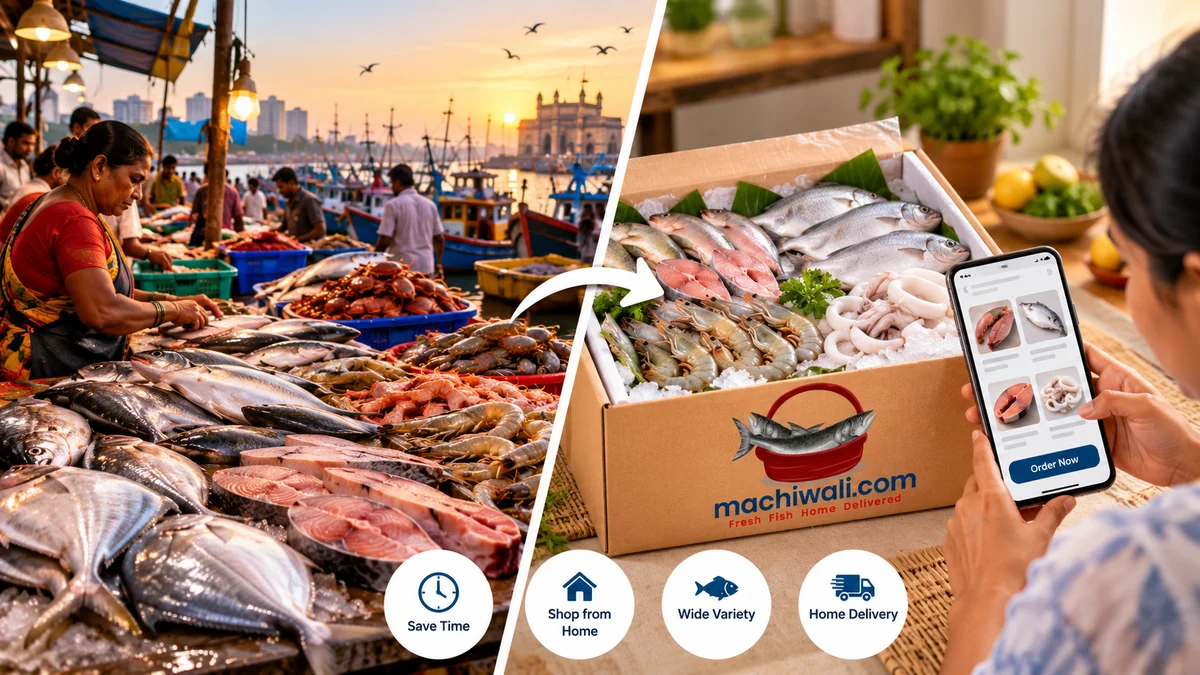
The Ultimate Guide to Buying Fish Online in Kalyan, Dombivli and Palava
Introduction: Making Seafood Shopping Easier
Fish has an important place in the food culture of Maharashtra. From traditional Maharashtrian fish curry and crispy fried surmai to coastal pomfret preparations, prawn masala and simple homemade fish fry, seafood offers families a wide variety of delicious meals to enjoy.
However, buying fish regularly is not always convenient.
You may need to visit a local fish market early in the morning, compare prices between vendors, check available varieties, arrange for cleaning and cutting, and carry your purchase home. For working professionals, busy parents and families living in residential complexes, finding time for these activities can be challenging.
This is where online seafood shopping can make a difference.
With Machiwali.com, customers can explore seafood options online and order from the comfort of their homes, subject to product availability and delivery coverage. Instead of spending time visiting multiple vendors, customers can browse available varieties, compare products and plan their seafood meals more conveniently.
Whether you live in Kalyan West, Kalyan East, Dombivli East, Dombivli West or the Palava residential belt, understanding how to choose, store and prepare seafood can help you make better purchasing decisions.
This comprehensive guide explains how to choose fish, what to look for when purchasing popular seafood varieties, how frozen fish differs from chilled fish, how to store seafood safely and what to consider when ordering fish online.
We will also explore popular seafood varieties, including surmai, pomfret, prawns, bangda, basa and squid, along with practical tips for planning seafood meals at home.
If you are looking for a convenient way to explore seafood options in the Kalyan–Dombivli region, this guide will help you understand what to look for before placing your next order.
1. Why More Consumers Are Exploring Online Fish Shopping
The way people purchase groceries has changed considerably. Online platforms allow customers to browse products, compare options and place orders without necessarily visiting a physical store.
Seafood shopping is no exception.
Customers who are accustomed to ordering groceries, vegetables and household essentials online may also appreciate the convenience of exploring fish and seafood through a website.
However, seafood is different from many packaged grocery products. Its quality depends on how it is handled, stored, transported and prepared. Consequently, customers should evaluate an online seafood seller on more than convenience alone.
Convenience for Busy Households
For people with demanding work schedules, visiting a fish market may require additional travel time and planning.
Online ordering can simplify the purchasing process by allowing customers to review available products before deciding what to buy.
This is particularly useful for:
Working professionals who have limited time for shopping.
Families planning meals for the week.
Couples who prefer ordering groceries from home.
Residents of apartment complexes and gated communities.
Customers who want to compare seafood varieties before purchasing.
People who prefer home delivery rather than carrying seafood themselves.
The actual convenience depends on the seller's delivery coverage, available delivery slots, ordering process and product range.
Easier Product Comparison
When buying fish from a physical market, customers often compare several stalls before making a decision.
An online catalogue can make product comparison easier by displaying information such as the fish variety, available weight, price, preparation format and other relevant product details.
For example, a customer planning a family meal may compare pomfret with surmai, while someone preparing a prawn curry may look specifically for cleaned prawns.
The ability to review available products before ordering can help customers make decisions according to their cooking requirements and budgets.
Better Meal Planning
Online seafood shopping can also support meal planning.
Instead of deciding what to cook after reaching the market, customers can plan their meals first and then select suitable products.
A household might choose bangda for a traditional fish fry, prawns for a weekend curry, basa for a mild-flavoured fish preparation and squid for a special seafood dish.
This approach can reduce unnecessary purchases and help households organise their weekly food budget.
What Should Customers Remember?
Convenience should never replace quality checks.
Before ordering fish online, review the seller's product descriptions, storage and delivery information, return policy, customer support details and any available information about sourcing and handling.
The best purchasing decision combines convenience, product suitability, transparent pricing and confidence in how the seafood is handled.
2. How to Choose the Right Fish for Your Family
Not every fish suits every recipe.
Some varieties are commonly used for shallow frying, while others are popular in curries, grilled preparations or oven-cooked dishes. Texture, flavour, bone structure, portion size and preparation time all influence which fish a household prefers.
Understanding these differences can make online seafood shopping easier.
Consider Your Cooking Method
Before selecting a fish, decide how you intend to cook it.
For example:
Fish fry: Surmai, pomfret and bangda are popular choices for Indian-style fried fish.
Fish curry: Pomfret, surmai and bangda can be used in different regional curry preparations.
Mild-flavoured meals: Basa is often selected by people who prefer a relatively mild taste and soft texture.
Prawn curry: Prawns can be prepared with coconut, onion, tomato, spices or other ingredients according to the recipe.
Seafood starters: Squid rings and prawns can be used for fried or sautéed dishes.
These are general culinary suggestions rather than strict rules. The best choice depends on your taste, recipe and preferred texture.
Consider the Number of People Eating
Portion planning is an important part of seafood purchasing.
When deciding how much fish to order, consider:
The number of people eating.
Whether fish is the main dish or one of several dishes.
Whether the product is whole, cleaned, filleted or cut into steaks.
The proportion of edible flesh relative to bones, shells or other discarded parts.
Whether you want leftovers for another meal.
A kilogram of whole fish does not provide the same amount of edible flesh as a kilogram of boneless fillets.
Similarly, the usable quantity from shell-on prawns will differ from that of peeled prawns.
Always check the product description and whether the listed weight refers to the whole product or the prepared edible portion.
Consider Your Household Budget
Seafood prices vary according to species, size, availability, season, sourcing, processing and market conditions.
Rather than choosing solely by price per kilogram, compare the usable quantity and the type of meal you want to prepare.
For example, a whole fish may require additional cleaning and preparation. A prepared fillet may cost more per kilogram but reduce the time needed before cooking.
Neither option is automatically better. The right choice depends on your priorities.
Consider Bones and Preparation Requirements
Some people prefer fish steaks, while others prefer whole fish or boneless fillets.
Families with children may pay particular attention to bones and preparation. However, even fish sold as boneless can contain occasional bones, so inspect it carefully before serving.
If you prefer a particular cut, check whether it is available in the product listing before ordering.
Machiwali.com customers should review product details to confirm the variety, cut, weight and preparation format before placing an order.
3. Popular Fish Varieties to Explore Online
Different seafood varieties offer different flavours, textures and cooking possibilities.
Here are six popular options worth understanding when shopping for seafood online.
Surmai: A Favourite for Indian Fish Fry
Surmai, commonly known as kingfish in many Indian markets, is popular in coastal cooking.
It is particularly well suited to preparations in which the fish is marinated with spices and cooked until the exterior develops a flavourful crust.
What Makes Surmai Popular?
Surmai is appreciated for its firm flesh and suitability for steak-style cuts.
Its texture makes it useful for several preparations, including:
Maharashtrian-style surmai fry.
Konkani fish curry.
Tawa-fried fish.
Grilled surmai.
Spiced pan-fried fish.
Fish preparations served with rice and traditional accompaniments.
A simple preparation involves marinating the steaks with turmeric, chilli powder, salt, ginger-garlic paste and a little lemon juice.
Some households add rice flour or semolina to create a crisp coating before shallow frying.
Cooking time depends on the thickness of the steaks, so cook until the fish is fully done without allowing it to become excessively dry.
What Should You Check Before Buying Surmai?
Look for clear information about the product's cut, weight and storage condition.
If purchasing frozen surmai, check the packaging for storage instructions and signs of damage. Avoid products with compromised packaging or evidence of thawing and refreezing.
Surmai is a good option for households looking for a fish that can be prepared in steak portions and served as a main dish.
Pomfret: A Versatile Fish for Traditional Meals
Pomfret is another familiar seafood choice in Maharashtra and other coastal regions of India.
It is commonly prepared whole, particularly when the fish is small enough to fit comfortably in a pan or cooking vessel.
Popular Pomfret Preparations
Pomfret can be used in several dishes, including:
Stuffed and fried pomfret.
Maharashtrian-style pomfret fry.
Goan-style fish curry.
Tandoori pomfret.
Pan-fried pomfret.
Steamed pomfret with aromatic seasonings.
A traditional preparation may involve making shallow cuts across the fish, applying a spice marinade and allowing the flavours to develop before cooking.
The cooking method can be adjusted according to the fish's size and the desired texture.
Why Do Customers Choose Pomfret?
Pomfret is appreciated for its delicate flavour and versatility.
However, pomfret is a category covering different species. The variety, size and price can differ substantially.
When ordering, verify the specific type of pomfret listed rather than assuming all pomfret products are identical.
Check the product's weight and whether it is sold whole or prepared in another format.
Prawns: Suitable for Curries, Starters and Everyday Meals
Prawns are among the most versatile ingredients in seafood cooking.
They can be used in traditional Indian curries, rice dishes, fried starters and quick weekday meals.
Popular Prawn Dishes
Prawns can be prepared in many ways:
Prawn curry with coconut milk.
Maharashtrian-style prawn masala.
Garlic butter prawns.
Prawn pulao.
Chilli prawns.
Crispy fried prawns.
Prawn sukka.
Prawn stir-fry with vegetables.
For a quick home-cooked dish, cleaned prawns can be marinated with turmeric, chilli, salt and a little lemon juice before cooking in a pan with oil, garlic and spices.
Prawns generally cook quickly. Overcooking can make them tough, so monitor them carefully.
What Should You Check When Buying Prawns Online?
Prawn products can differ significantly in preparation and usable quantity.
Check whether the prawns are:
Whole or headless.
Shell-on or peeled.
Deveined or not deveined.
Sold with the tail on or removed.
Raw or cooked.
Frozen or sold under chilled storage conditions.
These differences affect preparation time and the amount of edible product available.
If you prefer cleaned and deveined prawns, verify that this preparation is explicitly stated in the product listing.
Bangda: A Familiar Choice for Maharashtrian Cooking
Bangda, commonly known as Indian mackerel, is familiar to many households in Maharashtra.
It is often prepared with bold spices and served with rice, bhakri or other traditional accompaniments.
Popular Ways to Cook Bangda
Bangda can be used for:
Spicy bangda fry.
Maharashtrian fish curry.
Tawa-fried mackerel.
Coconut-based fish preparations.
Traditional masala fish.
Grilled mackerel.
A common preparation involves cleaning the fish, applying a spice marinade and shallow frying it.
Bangda's characteristic flavour works well with ingredients such as turmeric, chilli, garlic, tamarind and other regional seasonings.
Is Bangda Suitable for Everyday Meals?
Bangda can be included in household meal planning when it suits the family's preferences and budget.
As with any fish, proper storage, safe handling and thorough cooking are important.
When ordering online, check the product's size, whether it is sold whole and whether cleaning is included.
Basa: A Mild-Flavoured Option
Basa is often chosen by people who prefer a mild-flavoured fish.
It is commonly sold as a fillet, making it convenient for recipes that require portions without the structure of a whole fish.
Popular Basa Preparations
Basa can be used in:
Pan-seared fish.
Fish fingers.
Baked fish fillets.
Fish sandwiches.
Fish tacos.
Herb-seasoned fish.
Lightly spiced Indian fish curry.
For a simple meal, season the fillet with salt, pepper, garlic and lemon, then cook it in a pan or oven until fully done.
Because fillets can vary in thickness, cooking time should be adjusted accordingly.
What Should You Check When Buying Basa?
Read the product description carefully.
Check whether the product is a boneless fillet, whether it is frozen and what storage instructions apply.
If the product is glazed, the packaging or seller's product information should clarify the applicable weight declaration. Ice glaze can affect the difference between gross packaged weight and the quantity of fish itself.
Customers should compare products on a consistent weight basis wherever that information is available.
Squid: An Interesting Addition to Your Seafood Menu
Squid is a versatile seafood ingredient used in Indian coastal cooking and international cuisine.
It is often prepared as rings, strips or pieces.
Popular Squid Dishes
Squid can be used in:
Crispy fried squid rings.
Squid pepper fry.
Chilli garlic squid.
Squid masala.
Coconut-based squid curry.
Grilled squid.
Seafood stir-fry.
One important cooking consideration is texture.
Squid can become rubbery when cooked for an unsuitable length of time. Many recipes use either a relatively short cooking time over high heat or a longer, gentle cooking method.
The appropriate approach depends on the recipe and cut.
What Should You Check Before Buying Squid?
Confirm whether the squid is cleaned and cut into rings or sold in another format.
Also review the product's storage condition, packaging and preparation instructions.
For busy households, a prepared product may reduce the time required before cooking, provided its preparation format matches the intended recipe.
4. Fresh Fish Versus Frozen Fish: Understanding the Difference
One of the most common questions in online seafood shopping is whether fresh fish is better than frozen fish.
The answer depends on how the fish was handled, how long it has been stored, the temperature maintained throughout the supply chain and how the customer intends to use it.
The terms fresh, chilled and frozen should not be treated as interchangeable.
What Is Fresh Fish?
In everyday shopping, fresh fish generally refers to fish that has not been preserved through freezing.
Fresh fish is highly perishable and requires appropriate refrigeration and careful handling.
Its quality can deteriorate if it is exposed to unsuitable temperatures or stored for too long.
Customers buying chilled or fresh fish should pay attention to the seller's storage practices, delivery conditions and instructions for use.
What Is Frozen Fish?
Frozen fish has been stored at freezing temperatures to preserve it.
Freezing can help maintain product quality over an extended period when performed and managed correctly. However, freezing does not make poor-quality fish good, nor does it eliminate every food-safety risk.
The quality of frozen fish depends on factors such as:
The quality of the fish before freezing.
The time taken to freeze it.
The temperature maintained during storage.
Packaging quality.
Whether the product has partially thawed.
Whether the cold chain has been maintained during transportation.
Frozen seafood can be a convenient option for customers who want to plan meals in advance.
Is Frozen Fish Less Nutritious?
Freezing itself does not automatically make fish nutritionally inferior to fresh fish.
The nutritional value of seafood depends on the species, its original condition, storage, processing and cooking method.
Some nutritional changes may occur during storage, but properly frozen fish can remain a nutritious food choice.
The more useful question is whether the product has been handled correctly and whether it suits your cooking requirements.
Which Option Should You Choose?
Consider your circumstances.
Choose chilled fish when:
You intend to cook it soon.
You prefer not to use frozen products.
You have reliable access to appropriately refrigerated seafood.
The product's condition and handling information meet your expectations.
Choose frozen fish when:
You want to keep seafood for a planned future meal.
The product is appropriately packaged.
You have suitable freezer storage.
You want to reduce the need to purchase seafood immediately before every meal.
Neither category should be judged by its label alone.
For Machiwali.com customers, the appropriate choice depends on the product available, its stated storage condition and the intended preparation.
5. How to Buy Fish Online Safely
Ordering fish online requires a slightly different approach from ordering dry groceries.
Since seafood is perishable, customers should check the seller's product information and handling practices before purchasing.
Here is a practical checklist.
Step 1: Verify the Product Description
Read the complete listing before adding the product to your cart.
Confirm:
Fish species or variety.
Product weight.
Whether the fish is whole, cut, cleaned or filleted.
Whether the product is chilled or frozen.
Whether it contains bones, shells or other parts.
Whether the listed price applies to the displayed quantity.
If any important detail is unclear, ask the seller before placing the order.
Step 2: Check the Price per Usable Quantity
A lower price per kilogram does not always mean a better value.
Whole fish, steaks, fillets and cleaned seafood can differ in the proportion of edible flesh they provide.
For example, a whole fish may contain a head, bones and other parts that are not consumed by every household.
Prawns sold with their shells may require more preparation than peeled prawns.
Compare the price, preparation format and expected usable quantity rather than looking at the headline price alone.
Step 3: Review Delivery Coverage
Not every online seafood seller delivers to every locality.
If you live in Dombivli East, Dombivli West, Kalyan East, Kalyan West or Palava, confirm that your precise address falls within the seller's service area.
Postal codes can cover multiple localities, so a PIN-code match does not necessarily guarantee delivery to every address within that code.
Check the delivery terms before completing your purchase.
Step 4: Understand Delivery and Storage Conditions
Seafood should be maintained at appropriate temperatures throughout storage and transportation.
When an order arrives, follow the product's storage instructions promptly.
For chilled seafood, refrigerate it immediately if it is not being cooked at once.
For frozen seafood, transfer it to the freezer unless the label or seller's instructions specify otherwise.
Do not leave perishable seafood at room temperature for extended periods.
If a product arrives unexpectedly warm, with damaged packaging or showing signs of significant thawing when it should be frozen, contact the seller and avoid consuming it until the concern has been resolved.
Step 5: Review the Seller's Policies
Before ordering, look for information about:
Customer support.
Delivery timelines.
Cancellation conditions.
Refund or replacement eligibility.
Damaged or incorrect orders.
Product storage instructions.
Food-business registration information where applicable.
Clear policies help customers understand what to expect and how to resolve problems.
Step 6: Choose a Payment Method You Are Comfortable With
Review the payment options displayed during checkout.
Use the available secure payment methods and confirm the order total before paying.
Keep the order confirmation so you can refer to it if you need customer support.
Step 7: Inspect the Delivered Product
Check the product against your order confirmation.
Verify the variety, packaging, quantity and condition.
Follow the seller's storage instructions immediately.
If something appears incorrect, document the issue and contact customer support promptly.
A good online purchasing experience depends on both the seller's handling practices and the customer's attention to storage and preparation.
6. How to Store Fish and Seafood at Home
Correct storage is essential for seafood quality and food safety.
Fish and prawns are perishable products, so they should not be handled like ordinary shelf-stable groceries.
Refrigerating Chilled Fish
If you purchase chilled fish, keep it refrigerated at 4°C or below.
For best quality and safety, cook refrigerated raw seafood promptly. The US Food and Drug Administration advises using refrigerated seafood within one to two days of purchase, or freezing it if it will not be used within that period.
Follow any more specific instructions on the product label.
Keep raw seafood covered and separated from ready-to-eat foods to reduce the risk of cross-contamination.
Storing Frozen Seafood
Keep frozen seafood in a freezer maintained at approximately -18°C or below.
Check the package for storage instructions and any recommended use-by period.
Avoid repeatedly thawing and refreezing seafood.
If the product has thawed during delivery or storage, follow the label's instructions and seek guidance from the seller if the handling history is uncertain.
How to Thaw Frozen Fish Safely
There are three commonly recommended approaches.
Refrigerator thawing: Place the fish in a covered container in the refrigerator and allow it to thaw gradually.
Cold-water thawing: Place the seafood in a leak-proof bag and submerge it in cold water, changing the water regularly. Cook promptly after thawing.
Microwave thawing: Use the microwave's defrost function when appropriate and cook the seafood immediately afterwards.
Do not thaw seafood on the kitchen counter at room temperature.
Should You Wash Fish Before Cooking?
Washing raw fish under running water is generally unnecessary and can spread splashes containing microorganisms around the sink and nearby surfaces.
Instead, handle seafood carefully, follow the preparation instructions and cook it thoroughly.
Clean hands, utensils, cutting boards and work surfaces after contact with raw seafood.
How Do You Know When Fish Is Cooked?
A commonly recommended food-safety temperature for fish is an internal temperature of 63°C.
Where possible, use a food thermometer inserted into the thickest part of the fish.
Without a thermometer, check that the flesh is opaque and separates easily with a fork, while remembering that visual appearance alone cannot guarantee food safety.
Prawns should be cooked until their flesh is firm and opaque. Squid should be prepared according to a suitable recipe and cooked thoroughly.
7. How Much Fish Should You Buy for Your Family?
The right quantity depends on the number of people, their appetites, the preparation format and what else is being served.
Rather than using a single quantity for every household, start by estimating the edible portion required per person.
For a meal where fish is the main protein, an approximate planning range of 150–200 grams of edible fish per adult can be a useful starting point. This is a meal-planning estimate, not a dietary requirement.
Children, individual appetites and accompanying dishes may change the quantity needed.
Example: Planning a Meal for Four Adults
Suppose you want to serve four adults.
If you plan approximately 175 grams of edible fish per person, the total edible quantity would be:
175 grams × 4 = 700 grams of edible fish.
However, the amount you need to purchase may be higher if you select whole fish or seafood containing bones and shells.
The required purchase weight will depend on the product's usable yield.
For this reason, review the product format before deciding how much to order.
Planning Seafood for the Week
A household might organise its meals like this:
Day | Seafood choice | Preparation idea |
|---|---|---|
Monday | Surmai | Tawa fry with rice |
Wednesday | Prawns | Prawn masala |
Friday | Bangda | Traditional fish fry |
Sunday | Pomfret | Curry or whole-fish preparation |
This is only an example. You can adjust the frequency and quantities to your family's preferences and budget.
There is no need to purchase more seafood than you can store safely.
If you buy frozen products for several meals, keep them frozen until needed and thaw only the amount required.
8. Popular Maharashtrian Fish Recipes to Try at Home
Maharashtrian cuisine includes a variety of seafood preparations influenced by regional ingredients, family traditions and local cooking methods.
You can use familiar ingredients such as turmeric, chilli, garlic, coconut, tamarind and kokum to create different flavour profiles.
Here are four recipe ideas to explore.
Maharashtrian Surmai Fry
Ingredients:
Surmai steaks.
Turmeric powder.
Red chilli powder.
Ginger-garlic paste.
Lemon juice.
Salt.
Rice flour or semolina, if desired.
Oil for cooking.
Method:
Prepare the marinade by mixing turmeric, chilli powder, ginger-garlic paste, salt and lemon juice.
Apply it evenly to the fish.
Refrigerate the marinated fish while the flavours develop.
Coat lightly with rice flour or semolina if you prefer a crisp exterior.
Heat oil in a suitable pan.
Cook the steaks on both sides until the fish is fully cooked.
Serve with lemon, onion and rice or another accompaniment.
Adjust the spices to suit your taste.
Simple Coconut Prawn Curry
Ingredients:
Cleaned prawns.
Onion.
Tomato.
Ginger and garlic.
Turmeric.
Red chilli powder.
Coconut milk or ground coconut.
Salt.
Oil.
Lemon or kokum, if desired.
Method:
Heat oil in a pan and sauté the onion.
Add ginger and garlic, followed by tomato and spices.
Cook until the mixture develops a thick base.
Add coconut milk or ground coconut with a little water.
Bring the curry to a gentle simmer.
Add the prawns and cook until they are fully done.
Adjust the salt and acidity before serving.
Serve with steamed rice.
Crispy Bangda Fry
Ingredients:
Cleaned bangda.
Turmeric.
Red chilli powder.
Ginger-garlic paste.
Salt.
Lemon juice.
Rice flour.
Oil.
Method:
Clean and prepare the fish.
Apply a mixture of turmeric, chilli, salt, ginger-garlic paste and lemon juice.
Allow the fish to marinate under refrigeration.
Coat lightly with rice flour.
Shallow-fry until cooked through and crisp on the outside.
Serve with rice, bhakri or a fresh salad.
Cooking time depends on the size of the fish.
Pan-Fried Basa Fillet
Ingredients:
Basa fillets.
Garlic.
Black pepper.
Salt.
Lemon juice.
A small quantity of oil.
Fresh herbs, if desired.
Method:
Thaw the fillets safely if they are frozen.
Pat them dry with a clean paper towel.
Season with salt, pepper, garlic and lemon.
Heat oil in a pan.
Cook the fillets until the flesh is opaque and fully cooked.
Add fresh herbs and lemon before serving.
This preparation works well with vegetables, rice or potatoes.
9. Seafood Shopping on a Budget
Enjoying seafood does not necessarily mean buying the most expensive variety every time.
A practical seafood budget begins with understanding your preferences, planning meals and comparing the available products.
Rotate Between Fish Varieties
Instead of purchasing the same premium fish for every meal, consider rotating between different seafood options.
You might choose surmai or pomfret for a special meal and bangda for another preparation, depending on availability and price.
Prawns, basa and squid can provide additional variety.
This approach allows you to explore different recipes while keeping your purchasing decisions flexible.
Compare Price and Preparation Format
Consider the following when comparing products:
Price per kilogram.
Actual quantity supplied.
Whole versus cleaned product.
Bone-in versus boneless preparation.
Shell-on versus peeled prawns.
Frozen versus chilled storage.
Packaging and delivery charges.
A product with a lower displayed price may require more preparation or produce a lower edible yield.
Always compare like with like.
Plan Meals Before Ordering
Meal planning can help prevent unnecessary spending.
Before placing an order, decide how many meals you need to prepare and how much seafood your household can consume safely.
Avoid buying a large quantity simply because a product appears attractive.
Look for Transparent Pricing
A good product listing should clearly communicate the price, weight and product format.
Before completing checkout, review the total payable amount, including any applicable delivery charges or other fees.
Machiwali.com customers should refer to the current website listings for actual prices and availability rather than relying on prices mentioned in older articles or third-party posts.
10. Seafood Shopping in Dombivli: What Local Customers Should Consider
Dombivli is an important residential area in the Kalyan–Dombivli region, with households that have different shopping habits, budgets and food preferences.
For some customers, a traditional fish market remains the preferred choice. Others may value the convenience of ordering seafood online.
The right option depends on what the customer needs.
Fish Delivery in Dombivli East
Customers in Dombivli East may be interested in online seafood ordering when it fits their daily schedules and delivery requirements.
Before placing an order, confirm the exact locality, product availability and delivery terms.
If you live in an apartment complex or residential society, check whether the delivery provider can reach the building and whether any access instructions are required.
Fish Delivery in Dombivli West
Dombivli West also includes residential neighbourhoods with different shopping preferences.
Online ordering may help customers compare products before deciding what to cook.
However, delivery availability should always be checked against the precise address.
Choosing Seafood for Everyday Meals
Households in Dombivli can plan seafood meals around their preferred recipes.
Surmai and pomfret may suit traditional fish-fry preparations, while bangda can be used in a variety of regional dishes.
Prawns and squid can add variety to weekend meals, and basa can be considered for recipes that call for fillets.
The ideal choice depends on the family's preferences and budget rather than any single recommendation.
Looking for fish delivery in Dombivli? Visit Machiwali.com to explore the seafood products currently listed and confirm whether delivery is available at your address.
11. Seafood Shopping in Kalyan: Choosing Products for Your Household
Kalyan includes a range of residential neighbourhoods, household types and shopping preferences.
Customers may purchase seafood from local markets, independent vendors, supermarkets or online platforms.
Each option has different advantages.
Traditional markets allow customers to inspect products directly, while online platforms may offer the convenience of browsing a catalogue before ordering.
Fish Delivery in Kalyan West
When ordering seafood in Kalyan West, customers should check product availability, delivery coverage and the details displayed on the website.
If you are buying fish for a family meal, review the quantity and preparation format before checking out.
Fish Delivery in Kalyan East
Customers in Kalyan East can use the same approach.
Check whether your precise location is served and whether the available delivery options fit your schedule.
Do not assume that every locality within a postal code is automatically covered.
Selecting Seafood for Traditional Cooking
For customers who enjoy Maharashtrian-style seafood, a useful starting point is to identify the varieties that work with their preferred recipes.
For example:
Surmai can be used for steak-style fish fry.
Pomfret can be prepared whole or used in suitable curry recipes.
Bangda is often used in traditional fried-fish preparations.
Prawns can be cooked in masala or coconut-based curries.
Squid can be used in fried or spiced preparations.
Basa can be used in fillet-based recipes.
This variety gives households several ways to organise their seafood meals.
If you are searching for seafood delivery in Kalyan, explore the current product selection at Machiwali.com and check delivery availability for your location.
12. Seafood Delivery in Palava and Nearby Residential Communities
Residential developments in the wider Kalyan–Dombivli region have created demand for convenient access to everyday products and services.
However, online seafood delivery requires more than a website that accepts an order.
The seller must be able to fulfil the order within its service area while maintaining appropriate handling and storage conditions.
What Should Palava Residents Check?
Before ordering seafood online, residents should verify:
Whether their specific building or locality is covered.
Which seafood varieties are available.
Whether the products are chilled or frozen.
The delivery fee and expected delivery time.
The product's weight and preparation format.
The seller's customer support and order-resolution process.
These checks help avoid confusion during checkout.
Why Precise Delivery Coverage Matters
Large residential developments may include multiple phases, buildings and access points.
Even when a locality is associated with a particular postal code, a seller's actual service area may be smaller.
Customers should enter their exact delivery address and rely on the website's confirmed availability rather than assuming coverage.
For Machiwali.com, publishing accurate delivery information can help customers understand where orders can be fulfilled and reduce unsuccessful delivery attempts.
13. How Online Seafood Businesses Can Build Customer Trust
Buying seafood online requires confidence in the seller.
Customers cannot physically inspect the product before placing an order, so accurate information and dependable fulfilment become particularly important.
For seafood businesses, trust should be built through clear processes rather than unsupported marketing promises.
Accurate Product Descriptions
A product page should clearly identify the seafood variety, weight, preparation format and storage condition.
For example, a listing for frozen squid rings should not leave customers guessing whether the squid has been cleaned or how it should be stored.
Similarly, a listing for prawns should clarify whether they are whole, peeled, deveined or prepared in another way.
Transparent Prices
Customers should be able to understand what they are paying for.
Display the product price and applicable charges clearly before checkout.
If weight declarations distinguish between net seafood weight and packaged weight, explain the difference where relevant.
Avoid misleading comparisons between products with different preparation formats.
Responsible Handling
Seafood quality depends on appropriate sourcing, temperature control, packaging and transportation.
Businesses should establish suitable procedures for receiving products, maintaining storage temperatures, packing orders and handling customer concerns.
Where relevant, they should comply with applicable food-safety requirements and maintain appropriate records.
Clear Customer Support
Customers should know how to contact the seller if an order arrives damaged, incorrect or in a condition that raises a food-safety concern.
A transparent complaint-resolution process can help address problems promptly.
Honest Marketing
Avoid absolute claims such as "100% fresh every time," "zero risk" or "the best fish in India" unless a claim can be substantiated and is appropriate to use.
Clear, specific information is more useful to customers than exaggerated promises.
For Machiwali.com, long-term trust will depend on the consistency of the customer experience, from product selection to delivery and after-sales support.
14. Why Product Variety Matters When Buying Seafood Online
Different households have different seafood preferences.
Some customers prefer traditional whole fish, while others look for cleaned prawns or fillets that require less preparation.
Offering a suitable variety can help customers find products that match their cooking habits.
Whole Fish
Whole fish can be useful for households that prefer traditional preparations.
However, customers should understand that the edible yield will be lower than the total weight because some parts may be discarded during preparation.
Fish Steaks
Steaks are cut across the body of a fish and are often used for frying, grilling and curries.
They can be convenient when the recipe calls for individual portions.
Fish Fillets
Fillets are portions of fish flesh removed from the bones.
They are suitable for recipes that require relatively uniform portions, although occasional bones may still be present.
Cleaned Prawns
Cleaned prawns can reduce preparation time, depending on whether the heads, shells and digestive tract have been removed.
The exact preparation should be stated in the product description.
Squid Rings
Squid rings can be convenient for recipes that use sliced squid.
Customers should confirm whether the product has already been cleaned and whether further preparation is required.
Matching the Product to the Recipe
A good purchasing decision begins with the recipe rather than the product name alone.
If you plan to make surmai fry, look for suitable steak cuts. If you want a prawn curry, choose prawns in the preparation format your recipe requires.
For basa-based meals, check whether fillets are available.
This simple approach can help reduce preparation time and avoid ordering a product that does not suit your intended dish.
15. Is Buying Fish Online Worth It?
Whether online seafood shopping is worthwhile depends on your priorities.
Some customers prefer traditional markets because they can inspect fish in person, speak directly with vendors and select individual pieces.
Others may appreciate the convenience of online browsing and home delivery.
Neither approach is automatically superior in every situation.
When Online Seafood Shopping Can Be Useful
Online ordering may be particularly convenient when:
You have limited time for shopping.
You already know which seafood varieties you prefer.
You want to compare listed products and prices.
You prefer home delivery.
You want to plan meals before making a purchase.
The seller offers suitable products within your locality.
When a Physical Market May Be Preferable
A physical market may be useful when:
You want to inspect the product in person before buying.
You prefer to negotiate directly with vendors.
You want to choose a particular fish by size or appearance.
You need an unusual variety that is not available online.
You want to buy immediately and take the product home.
What Matters Most?
The important factors are product quality, appropriate handling, transparent pricing, suitable quantities and a reliable purchasing process.
An online seller should make product information easy to understand and provide clear instructions for delivery, storage and customer support.
Customers should evaluate the actual service rather than assuming that an online purchase is automatically better than a traditional market purchase.
16. A Practical Checklist Before Placing Your Next Seafood Order
Before ordering seafood online, use this checklist to make sure you have considered the most important details.
Product Selection
Have I selected the correct fish variety?
Does the product match my intended recipe?
Is the preparation format suitable?
Have I checked the product weight?
Budget
Have I checked the price?
Have I reviewed the total payable amount?
Are delivery charges or other fees clearly displayed?
Have I compared products on a consistent weight basis?
Delivery
Is my exact address covered?
Is the expected delivery time suitable?
Do I need to provide any delivery instructions?
Storage
Is the product chilled or frozen?
Do I have sufficient refrigerator or freezer space?
Have I checked the storage instructions?
Food Safety
Is the packaging intact when the order arrives?
Does the product appear consistent with its stated storage condition?
Can I refrigerate or freeze it promptly?
Do I know how to thaw and cook it safely?
Customer Support
Do I know how to contact the seller?
Have I reviewed the relevant cancellation, refund or replacement conditions?
Have I retained the order confirmation?
Taking a few moments to complete these checks can make seafood shopping more organised and help you avoid common purchasing mistakes.
17. Frequently Asked Questions About Fish Delivery in Kalyan and Dombivli
1. Where Can I Buy Fish Online in Kalyan?
You can explore online seafood options through Machiwali.com. Check the current product listings, prices and delivery availability for your exact address before placing an order.
2. Does Machiwali.com Deliver Fish in Dombivli?
Customers in Dombivli can check whether their locality is covered by visiting Machiwali.com and entering their delivery details. Availability should be confirmed for the specific address.
3. Can I Order Fish Online in Kalyan West?
You can check the available seafood products and delivery coverage on Machiwali.com. Delivery eligibility depends on the service area and fulfilment arrangements in effect when you place the order.
4. Is Fish Available for Online Delivery in Dombivli East?
Delivery availability depends on the seller's current service area. Enter your address on Machiwali.com or contact customer support to confirm whether your locality is served.
5. Can I Order Seafood Online in Palava?
Palava residents should check their precise address on the website before placing an order. A postal code alone does not guarantee delivery to every building or residential phase.
6. Which Fish Varieties Can I Look for Online?
Popular varieties to look for include surmai, pomfret, bangda, basa, prawns and squid. Actual availability depends on the current product catalogue.
7. Which Fish Is Best for Frying?
Surmai, pomfret and bangda are commonly used for Indian-style fish fry. The best choice depends on your preferred flavour, texture, cut and recipe.
8. Which Fish Is Suitable for Curry?
Several varieties can be used in fish curry, including pomfret, surmai and bangda. Prawns are also widely used in curry preparations. Choose according to your preferred regional recipe.
9. Is Frozen Fish Suitable for Home Cooking?
Yes. Properly handled frozen fish can be suitable for home cooking. Follow the package's storage instructions, thaw it safely and cook it thoroughly.
10. Is Frozen Fish as Nutritious as Fresh Fish?
Freezing does not automatically make fish nutritionally inferior. Nutritional value depends on the species, original quality, storage and preparation method.
11. How Should I Store Fish After Delivery?
Follow the product's storage instructions. Keep chilled fish refrigerated and frozen seafood in a suitable freezer. Do not leave perishable seafood at room temperature for extended periods.
12. How Long Can I Keep Fish in the Refrigerator?
The US Food and Drug Administration recommends using refrigerated seafood within one to two days of purchase or freezing it if it will not be used within that period. Follow any more specific product instructions.
13. How Do I Thaw Frozen Fish?
Thaw fish in the refrigerator, in cold water using a leak-proof bag, or in a microwave when appropriate. Cook promptly after cold-water or microwave thawing. Do not thaw fish on the kitchen counter.
14. How Much Fish Should I Order for a Family of Four?
The required quantity depends on appetites, the number of accompanying dishes and the product format. As a starting point, you might plan approximately 150–200 grams of edible fish per adult, then adjust the purchase weight for bones, shells and other non-edible parts.
15. What Should I Check Before Buying Prawns Online?
Check whether the prawns are whole or headless, shell-on or peeled, deveined or not, and raw or cooked. These details affect preparation time and usable quantity.
16. Can I Buy Fish Fillets Online?
Fish fillets may be available depending on the seller's product catalogue. Check the current listings for suitable fillet products and their storage instructions.
17. How Do I Compare Seafood Prices Online?
Compare the species, product weight, preparation format, usable quantity and total price, including delivery charges. Make sure you are comparing equivalent products.
18. What Should I Do if Seafood Arrives in Damaged Packaging?
Photograph the packaging and product, contact the seller promptly and follow their instructions. If the seafood's handling history is uncertain or it appears unsafe, do not consume it.
19. Is Online Seafood Shopping Better Than Buying from a Local Fish Market?
The answer depends on your preferences. Online ordering may offer convenience and product comparison, while physical markets allow direct inspection and selection. Evaluate the product quality, handling practices, price and service.
20. How Can I Find Seafood Suitable for Maharashtrian Recipes?
Look for varieties that match your preferred preparation. Surmai, pomfret and bangda are commonly used in Maharashtrian-style fish dishes, while prawns can be used for masala and coconut-based curries.
21. Does a PIN Code Guarantee Fish Delivery?
No. PIN codes identify postal areas and do not guarantee that every address within the area is covered by a particular delivery service. Confirm the exact address on the seller's website.
22. What Is the Safest Way to Cook Fish?
Store it appropriately, prevent cross-contamination and cook it thoroughly. A commonly recommended internal temperature for fish is 63°C, measured at the thickest part with a food thermometer.
23. Can I Order Seafood for Weekend Meals?
You can plan your seafood purchases around weekend meals, provided the desired products are available and your delivery address is covered. Check the current ordering and delivery information before purchasing.
24. Where Can I Check Machiwali.com's Latest Seafood Prices?
Visit Machiwali.com and refer to the current product listings. Prices and availability may change, so use the website's displayed information when making a purchase decision.
18. The Future of Convenient Seafood Shopping in Kalyan–Dombivli
The Kalyan–Dombivli region includes established neighbourhoods as well as expanding residential communities.
As shopping preferences evolve, consumers may increasingly look for ways to combine the familiarity of traditional seafood with the convenience of digital ordering.
However, convenience alone is not enough to establish a dependable online seafood business.
Customers need accurate product descriptions, appropriate storage and transportation, transparent pricing, convenient ordering and responsive customer support.
Businesses must also understand local preferences.
Some customers may prioritise traditional fish varieties, while others may be interested in prawns, fillets or squid. Household budgets, cooking habits and preparation preferences can differ substantially between neighbourhoods.
For this reason, the most useful approach is to make seafood information accessible and allow customers to select products according to their requirements.
Online seafood shopping can complement traditional fish markets by offering another way for customers to explore products and organise their purchases.
The long-term opportunity lies in providing a dependable service that customers are comfortable using repeatedly.
Conclusion: Explore Seafood Shopping with Machiwali.com
Fish and seafood offer households a wide range of culinary possibilities, from traditional Maharashtrian fish fry to coconut-based curries, prawn masala, grilled fillets and squid preparations.
Choosing the right seafood begins with understanding your recipe, portion requirements, budget and preferred product format.
It is equally important to check product descriptions, compare prices fairly, maintain the correct storage conditions and handle seafood safely.
For residents of Kalyan, Dombivli and Palava, online seafood shopping may provide a convenient alternative to visiting a physical market, depending on delivery availability and personal preferences.
Machiwali.com aims to make seafood shopping more accessible by offering customers an online platform to explore available products.
Whether you are planning a traditional family meal, preparing seafood for the weekend or looking for ingredients for a new recipe, take the time to review your options and choose products that suit your needs.
Ready to explore seafood online?
Visit Machiwali.com to browse the available seafood selection, review current prices and check whether delivery is available at your address.
Make your next seafood meal a little easier to plan with the right product, the right quantity and a recipe your family enjoys.